
Home › Coverages › Client Property & Lost Key Coverage for Cleaners
Client property and lost key coverage for janitorial companies
Care, custody and control insurance for a cleaning company is an add-on that buys back part of what general liability excludes: client property your crew is handling and, in some programs, the surface it's working on. Lost key coverage is a separate, optional add-on that pays to re-key a client's building when keys in your care are lost or stolen.
- Since 2003
- 12+ A-rated carriers
- 28 states
- Independent agents
Start your cleaning business insurance quote
Takes about two minutes. A licensed agent follows up.
Licensed in 28 states · NPN 7642818 · Since 2003
What care, custody and control insurance fixes for a janitorial company
"Care, custody and control" is policy language for property you're handling or in charge of at the moment something goes wrong. Standard general liability forms exclude much of it. Care, custody and control insurance, usually sold as a buy-back inside a janitorial program, returns a slice of that coverage, up to a modest sublimit.
It helps to know that the standard ISO form handles client property with three separate exclusions, not one:
- Personal property in your care, custody or control. Movable things: a tenant's framed print you took down to dust, a desk phone, the boxes you shifted to vacuum behind a credenza.
- The particular part of real property you're working on. Built-in surfaces, when your work damages them while you're doing it: the restroom partitions you were descaling, the granite counter you were degreasing.
- The particular part that has to be restored, repaired or replaced because your work on it was done incorrectly. This one stops applying once the job counts as completed.
Strictly speaking, only the first is the care, custody and control exclusion. The floor or wall you're cleaning is real property, so the other two are what usually bite. Damage beyond that particular part, like the carpet next to the counter, is a different question and is often where GL still responds.
Whether an item was in your care is fact-specific. In one industry Q&A about a janitor who threw out a bag a client hadn't meant to discard, insurance educators disagreed on whether the exclusion even applied.
How the janitorial market buys it back
There's no single ISO form for this, so ask for it by what it does. Janitorial programs often add a customer-property or care, custody and control buy-back with a small sublimit and a deductible. Published examples:
- one specialty carrier's janitorial program offers a property damage extension of $5,000 per occurrence and $25,000 aggregate
- one published janitorial program lists care, custody and control coverage plus a "your work" coverage, without stated limits
- the industry Q&A above describes a janitor's policy with a $2,500 personal-property endorsement and a $500 deductible
Not every carrier offers it, and sublimits vary.
How lost key coverage works
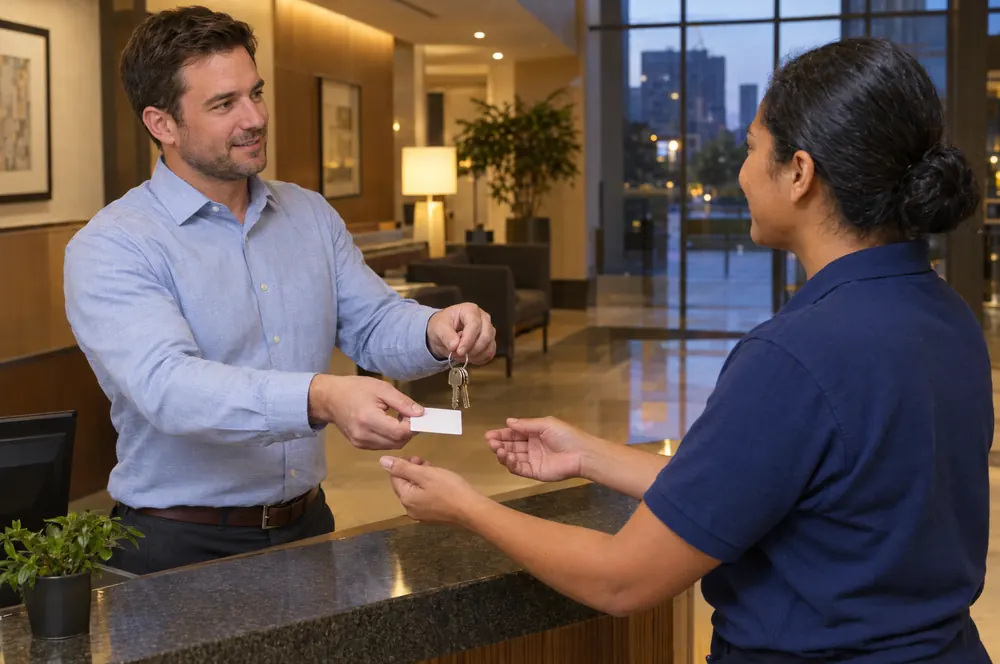
Losing a key ring doesn't necessarily damage anything, and the keys were in your care, so a standard GL policy may not pay when a property manager re-keys the building and bills you. Lost key coverage, sometimes called lock and key replacement, is an optional add-on. It typically pays to re-key locks, replace cylinders, cut new master keys or swap lock hardware at the client's building after its keys in your care are lost or stolen.
Where it lives depends on the carrier. One specialty carrier puts $25,000 per occurrence of lost key coverage in its optional inland marine package; another program sells it inside a janitorial package; an online insurer offers it as a GL add-on. Get a quote for your cleaning business →
What these add-ons can cover, and what they usually don't
| What they can cover | What they usually don't |
|---|---|
| A client's movable property damaged while your crew is handling it, up to the buy-back sublimit | Losses above the sublimit, which ran from $2,500 to $25,000 in the published examples we found |
| Some damage to the surface you were working on, if the program includes "your work" coverage | Theft by your employees, which goes to a janitorial bond or crime coverage |
| Re-keying locks and cutting new master keys after keys in your care are lost or stolen | What a thief takes after using a lost key to get in |
| New cylinders and lock hardware at the client's building | A key your own employee takes and misuses on purpose |
| Re-issuing access cards and reprogramming readers, only if your endorsement's wording says so | Changing alarm codes, which rarely fits a property-damage policy |
| Damage beyond the surface you were working on, which your base GL often handles | Your own floor machines and carts, which need an equipment floater |
Three nights when client property goes wrong
Each of these fictional examples lands on a different part of the policy.
Example scenario: the model in the architecture studio
At 8:30 p.m., a crew member at an architecture firm lifts a client's foam-core building model off a conference table to wipe the surface. It slips and breaks. The model was personal property in your crew's hands at the time, so your GL may exclude it. A client-property buy-back may pay, up to its sublimit, after the deductible.
Example scenario: the hotel elevator panels
At 3 a.m., a porter polishes the stainless-steel panels in a hotel's guest elevators with the wrong product. By morning, the steel shows permanent spotting. Those panels were the particular part he was working on, so the exclusion for property you're working on is likely to come up. If your program includes "your work" coverage, that's where the conversation goes.
Example scenario: the fob ring in the parked car
At 5:10 a.m., a route supervisor stops for gas between a suburban office park and a credit union. Someone smashes his car window and takes a bag holding the park's exterior keys and a dozen access fobs. The property manager re-keys four entrances, deactivates the fobs and bills you for all of it. Lost key coverage may pay the re-keying. Whether it pays for the fobs depends on the endorsement's wording.
What client property and lost key coverage cost
Carriers usually price these as endorsements on a janitorial package rather than standalone policies, so you'll rarely see a separate published price. What moves the cost is the sublimit you choose, the deductible, how many buildings you hold keys for and your claims history. Your price depends on the payroll in each class code, your annual sales, the kinds of buildings you clean, how much specialty and chemical work you do, the vehicles your crews drive, your claims history and the limits your contracts require.
Key control is part of the underwriting conversation. Underwriters and clients often ask how you track keys and credentials: a key log, a card sign-out sheet, who carries master keys, and how fast codes change when someone leaves. Clear answers make the quote go faster. Our cost guide shows how the add-ons fit into a full janitorial budget. Get a quote for your cleaning business →
Which cleaning companies need client property and lost key coverage
If your crews work unsupervised in a client's building after hours, you're the target market. The need rises with:
- Master keys and multi-tenant access. One lost ring can mean re-keying a whole tower. See office cleaning insurance.
- Rooms full of expensive equipment. Exam rooms and labs hold devices your crew wipes down every night. See medical facility cleaning insurance.
- District keys and alarm systems. Schools often issue building keys and codes to the contractor. See school cleaning insurance.
- Delicate surfaces. Stone, stainless and wood finishes are where the "property you're working on" exclusion bites. See specialty cleaning insurance.
Neither add-on replaces a bond. When the loss is theft by your own employee, the claim points to a janitorial bond or crime coverage that includes clients' property.
How public buyers in our states put access risk in writing
Some state and local buyers spell out exactly how much they worry about crews with keys after dark.
- Georgia's state purchasing guidelines say fidelity bonds are typically required when a supplier's staff work on a state contract with limited state supervision and easy access to state property or money, and they list after-hours janitorial services first. Georgia cleaning insurance
- In Kentucky, a 2025 county library cleaning RFP required a logbook at each site and held the winning cleaning company liable for unauthorized or criminal acts by its employees. Kentucky cleaning insurance
- Ohio law bars a school district, educational service center or chartered nonpublic school from letting a contractor's employee in a job with routine interaction with children work there unless the employer proves a clean criminal records check from the five years before the start date, or a school employee stays present whenever that worker is with children. Ohio cleaning insurance
None of these is a lost key rule, but they show what buyers check before trusting you with access.
Related coverage
Client property and lost key questions
Does my general liability policy cover a client's property my crew damages?
What is lost key coverage, and is it part of general liability?
Does lost key coverage pay for new key cards or fobs?
Is care, custody and control coverage the same as a janitorial bond?
Will keeping a key log lower my insurance cost?
Ready to see what you'd pay?
Independent agents, 12+ A-rated carriers, and a licensed agent back to you within one business day.