
Home › Coverages › Pollution & Chemical Liability for Cleaning Companies
Pollution and chemical liability for cleaning companies
Contractors pollution liability insurance answers when your crew's chemicals, fumes or runoff hurt someone or damage their property, covering the claim, your defense and the cleanup, which is the gap a general liability pollution exclusion can open for a cleaning company. Whether you need it depends on the pollution wording in your GL, the courts in your state and the contracts you sign.
- Since 2003
- 12+ A-rated carriers
- 28 states
- Independent agents
Start your cleaning business insurance quote
Takes about two minutes. A licensed agent follows up.
Licensed in 28 states · NPN 7642818 · Since 2003
What contractors pollution liability insurance does for a cleaning company
Contractors pollution liability (CPL) is built to fill the holes that pollution and related exclusions leave in a contractor's liability insurance. It typically covers claims by other people for bodily injury and property damage, the cost of defending them, and cleanup costs when your operations release or spread a contaminant.
For a janitorial company, that's not smokestacks or tank farms. It's the everyday chemistry on your carts:
- fumes from a floor stripper or finish that make tenants sick
- two products mixed in a client's janitor closet
- disinfectant overspray that spots finishes or damages equipment
- a spill or rinse water that reaches a floor drain or a storm drain
Why your GL may or may not answer first
The standard ISO liability form defines "pollutants" broadly enough to include fumes, vapor, acids, alkalis and chemicals. That could describe a bucket of stripper or a disinfectant mist. But the unendorsed form carves out one situation: harm indoors from fumes or vapors given off by materials you carried into that building to do the job.
Many contractor policies don't carry that unendorsed version. They swap in a total pollution exclusion endorsement, such as ISO CG 21 49, or versions with narrow exceptions like CG 21 55 (hostile fire) and CG 21 65 (building heating, cooling and dehumidifying equipment, plus hostile fire). Those endorsements generally take the indoor-fumes exception away. Two GL quotes at the same price can answer a fumes claim in opposite ways, so ask which pollution form each one carries.
Courts read the exclusion differently
Some state high courts limit pollution exclusions to traditional environmental pollution. Others apply them to fumes from products used exactly as intended. A few examples, none involving janitorial products:
- New Jersey (2005): a doctor with an office in a shopping center said he was hurt by fumes from a floor coating and sealant job there. The court limited the exclusion to traditional environmental pollution, so it didn't bar coverage.
- New York (2003): the state's top court held the exclusion didn't clearly reach paint or solvent fumes inside an office building, so it was read in the policyholder's favor.
- Pennsylvania (1999): the exclusion did apply to fumes from a concrete curing compound.
The practical point: whether a chemical incident is covered under your GL can depend on your policy's pollution wording and your state's courts. A CPL policy takes much of that guesswork out. Get a quote for your cleaning business →
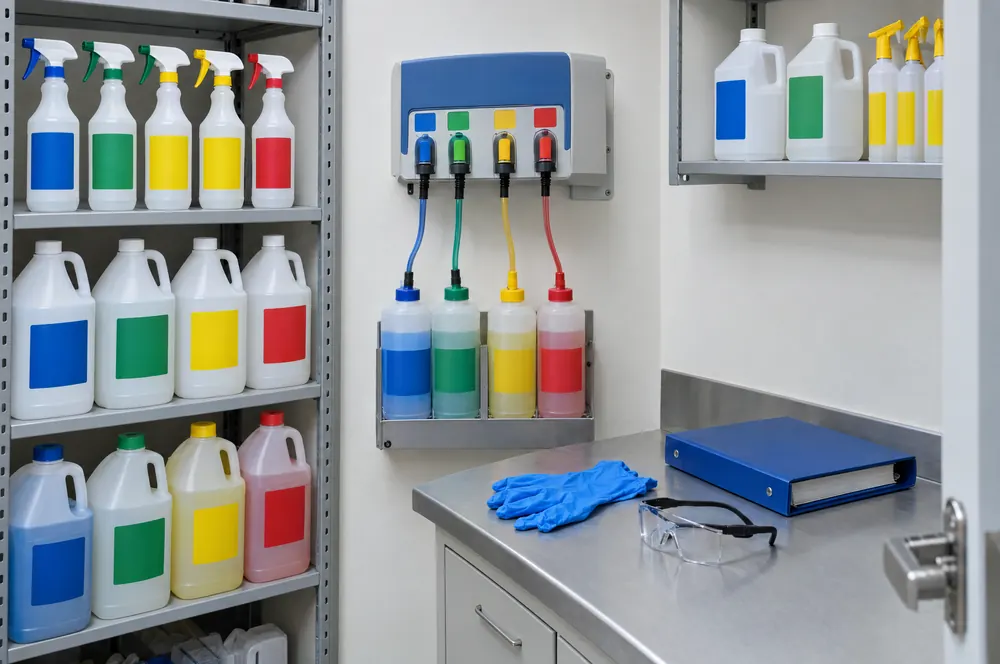
What chemical liability insurance for a cleaning business covers, and what it usually doesn't
| Where a CPL form is built to help | Where it usually stops short |
|---|---|
| Injury to tenants, visitors or client staff from fumes or vapors your products released | Chemical injuries to your own crew, which belong on workers' comp |
| Damage to finishes, equipment or vehicles from overspray, spills or splashes | Your own chemical stock, carts and floor machines |
| Cleanup costs when a spill or rinse water reaches a drain, soil or water | On a claims-made form, incidents before the retroactive date |
| Defense of covered pollution claims | Fungi or bacteria claims, unless the form says it includes them |
Most GL policies also carry a fungi or bacteria exclusion (ISO CG 21 67), so ask whether your CPL form picks those claims up or leaves them out too.
Three chemical incidents on a cleaning route
These fictional examples show the kinds of claims a CPL policy is written for.
Example scenario: the janitor closet at the fitness club
At 4:45 a.m., a new crew member at a 24-hour fitness club pours two restroom products into the same bucket. Fumes drift through the vent into the women's locker room, and a front-desk employee and two early members need treatment. The club's staff and members aren't your employees, so their claims run against your company. Whether your GL pays may turn on its pollution wording; CPL is designed for exactly this.
Example scenario: the storm drain behind the flex building
At 11:30 p.m., a floor crew finishing a strip job at a flex-office building empties its rinse water into a parking-lot storm drain. Two weeks later the city traces the residue, orders the owner to clean the drain line and the owner forwards the bill to you. Cleanup costs like these are a core part of what CPL typically covers. A GL pollution exclusion is likely to come up first.
Example scenario: the showroom on Sunday morning
At 7 a.m. on a Sunday, a crew disinfects a car dealership showroom with an electrostatic sprayer. The mist settles on six new vehicles and the showroom glass, leaving spots that need professional paint correction. Whether a GL carrier treats disinfectant mist as a pollutant depends on the policy form and the state. It's the kind of claim a CPL policy is written to answer, subject to its terms.
What pollution coverage costs a cleaning company
We haven't found a reliable published price for janitorial CPL, and we won't guess at one. Some carriers fold it into a janitorial package; others write it as a combined GL and pollution form or a standalone policy, and each prices it differently. One published janitorial program lists contractors pollution liability among its package coverages.
The things that move the price are the products you use and how much of your work involves them, how much floor care you do, the limit you choose and whether the form is occurrence or claims-made. Our quote form asks whether you handle chemical cleaning products and what share of your work involves them. Your price depends on the payroll in each class code, your annual sales, the kinds of buildings you clean, how much specialty and chemical work you do, the vehicles your crews drive, your claims history and the limits your contracts require.
On a claims-made form, the retroactive date has to carry over from one policy year to the next, even when you change carriers. Lose it and older incidents can end up with no coverage. Get a quote for your cleaning business →
Which cleaning companies need pollution liability most
Not every route needs a separate CPL policy. It usually makes the most sense when:
- Floor care is a big share of your work. Stripping and refinishing are the most chemical-heavy part of the job. See specialty cleaning insurance.
- You disinfect heavily. Clinics and medical offices run on EPA-registered disinfectants and sprayers. See medical facility cleaning insurance.
- You clean plants and warehouses. Industrial sites have floor drains, process areas and owners who write pollution limits into the contract. See industrial cleaning insurance.
- You strip and refinish schools over the summer. Big floor jobs in occupied buildings raise the fumes question. See school cleaning insurance.
- A contract names it. If an insurance exhibit asks for contractors pollution coverage, your GL alone won't satisfy it.
For the OSHA side of chemical work, our guide to cleaning chemicals and liability explains which rules exist and where to find them.
State notes on pollution coverage
Pollution claims are where state law matters most, because each state's courts decide how far the exclusion reaches. The New Jersey, New York and Pennsylvania decisions above are examples; other states have their own case law, and some haven't ruled at all.
Public buyers can also ask for CPL directly. Georgia's state insurance and bonding guidelines set a custodial template that names the State as additional insured, with a waiver of subrogation, on the general liability, contractors pollution, auto and umbrella policies. If you bid Georgia state work, a separate CPL policy may be part of the price. Georgia cleaning insurance
For courts and contracts where you work, see your state page. For questions about how your state's courts read the exclusion, talk to an attorney.
Related coverage
Pollution and chemical liability questions
Does general liability cover a chemical spill or fumes from my cleaning crew?
Do I need pollution insurance to use disinfectants or floor strippers?
Is contractors pollution liability claims-made or occurrence?
Does pollution coverage include fungi or bacteria claims?
A contract asks for "contractors pollution liability." Can my GL satisfy it?
Ready to see what you'd pay?
Independent agents, 12+ A-rated carriers, and a licensed agent back to you within one business day.